Gochujang Chicken Wings
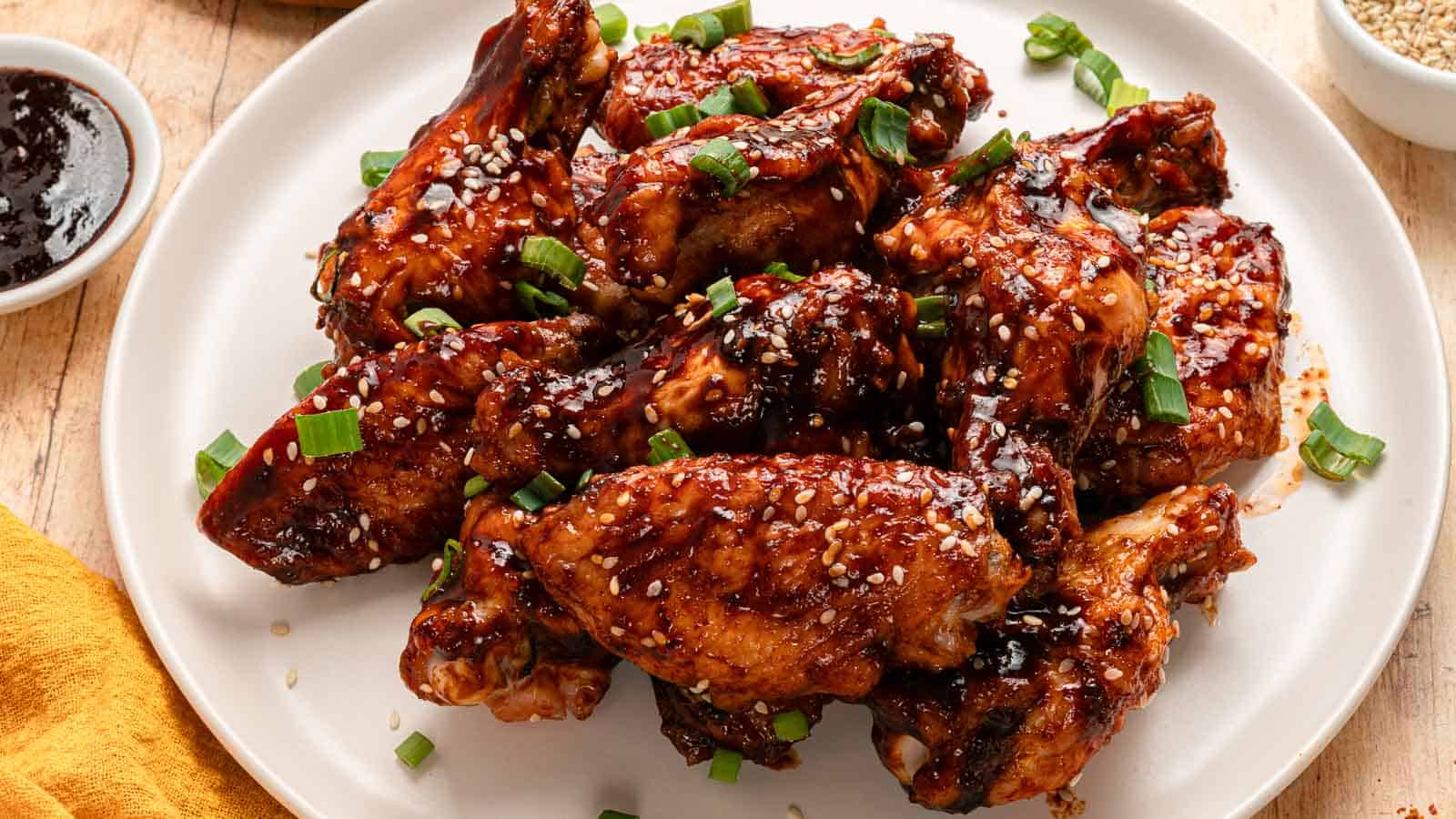
The moment these Gochujang Chicken Wings emerge from the oven, all beautifully blistered and crunchy, I coat them in a rich sauce that’s bursting with the scents of fermented chili, garlic, and toasted sesame seeds. Even after being sauced, the wings retain their crispiness, giving you that satisfying crackle beneath the sweet glaze.
This post may contain affiliate links. As an Amazon Associate, I earn from qualifying purchases. See my Affiliate Disclosure.
I love to stack these wings on a platter and sprinkle chopped green onions on top, inviting everyone to dig in. They make for an excellent snack when friends gather for the big game, movie night, or just for a casual hangout. This version has a Korean twist thanks to gochujang, perfect for those who enjoy bold Asian flavors.
I frequently incorporate gochujang into my cooking. It’s an ideal ingredient for adding heat with a robust umami taste. With its salty and slightly sweet flavor, it’s thick enough to create a hearty glaze with minimal effort. When simmered with honey, soy sauce, and vinegar, it transforms into a glossy, smooth sauce in just a few minutes.
The process to make these wings is both straightforward and dependable, yielding that desirable crispy skin without the mess that comes from deep frying. I place the wings on a rack, allowing hot air to circulate around them. Once they come out of the oven, I immediately toss them in the sauce while they’re still warm. Timing is key, ensuring the wings remain crispy underneath while effortlessly holding onto the glaze.
Ingredients Notes
This recipe calls for a few key ingredients, and each plays a significant role. Gochujang serves as the foundation of the sauce. Different brands can vary in spiciness, so you might want to experiment to discover your preferred one. For those unfamiliar, gochujang is a fermented chili paste made from red pepper powder, rice, and soybeans, providing saltiness and umami alongside heat. It’s now commonly available in many grocery stores, as well as larger Asian supermarkets or Korean markets.
I incorporate gochujang in various dishes, including Air Fryer Korean Fried Chicken, Gochujang Tofu, and Gochujang Noodles, as well as in the sauce for Hoisin Beef.
You might be curious about why I coat the wings with baking powder. This isn’t about flavor. Instead, it ensures the skin becomes extra crispy. Baking powder raises the pH of the chicken skin, promoting quicker browning and drying in the oven, rather than steaming.
Sesame oil adds a lovely aroma to the sauce, so be sure to measure it carefully and avoid substituting it with another oil. It’s a staple flavoring in Korean cuisine, giving the sauce a true authentic touch.
How To Make Gochujang Chicken Wings
Even with its bold taste, preparing this dish is a breeze. You’ll bake the wings until they’re crispy, create a quick sauce, and then combine everything. Here’s how it comes together.
- Thoroughly dry the chicken wings and coat them in baking powder along with the seasonings.
- Place the wings on a rack above a baking sheet, so air can circulate around them as they cook.
- Bake the wings, turning them once, until their skin is blistered.
- While the wings are baking, prepare the sauce by mixing the gochujang and other ingredients in a small saucepan and heating it over medium until it thickens.
- Once cooked, quickly transfer the wings to a large bowl, drizzle the sauce over them, and toss until each wing is evenly coated.
- Finish with sesame seeds and chopped green onions, then serve immediately.
A common pitfall is overcrowding the wings on the rack, which can trap steam and soften the skin. If they appear pale halfway through baking, they need more space or time, not more sauce.
Expert Tips for Success
These wings are quite forgiving, but a few key details can significantly enhance their texture and flavor. Focus on the wings’ surface and the timing of adding the sauce. Small tweaks will keep them crispy and glossy rather than soft.
- Make sure to pat the wings very dry before seasoning; this allows the baking powder to work effectively.
- Opt for a wire rack instead of placing the wings directly on the pan to avoid soggy bottoms. This method saves you from having to flip the wings during cooking.
- Combine the wings with the sauce while they’re hot, so the glaze adheres well and spreads evenly.
- Always sample the sauce before adding chili flakes. The heat level of gochujang can vary across brands, meaning your sauce might not require any extra spice.
What to Serve With It
I typically serve these wings as the highlight of the meal alongside something cool and refreshing. A simple Cucumber Salad dressed with rice vinegar and a hint of sugar provides a nice contrast to the heat and stickiness. Pickled Daikon Radish offers a similar balance as well. If you’re a fan of spicy dishes, Cucumber Kimchi is also a great addition. Steamed rice or Coconut Rice work nicely too, especially if you enjoy drizzling some extra sauce on top.
For a more extensive spread, consider pairing the wings with dishes that are light and flavorful. I enjoy serving them with Sesame Noodles or easy vegetable sides like Stir-Fried Lotus Root or Chinese Dry Fried Green Beans. Any leftover wings reheat beautifully in a hot oven, making for a fantastic lunch the next day with rice and greens.
Gochujang Chicken Wings
Robin Donovan
These Gochujang Chicken Wings come out crispy from the oven and are coated in a thick, spicy glaze. The sauce blends fermented chili paste with honey, soy sauce, and sesame oil for a sticky finish. It all comes together with some basic prep and a swift simmer. Perfect for casual dinners or sharing directly from a platter.
(keep your screen awake)
-
Pat wings dry with paper towels (this helps crisp them up).
-
In a bowl, toss them with baking powder, salt, and garlic powder until evenly coated.
-
Preheat oven to 425°F. Place wings on a wire rack over a baking sheet. Bake for 40–45 minutes, flipping once, until crispy.
-
In a small saucepan over medium heat, mix gochujang, soy sauce, honey, rice vinegar, sesame oil, garlic, and ginger. Simmer for 2–3 minutes, stirring often, until slightly thickened.
-
Transfer hot wings to a large bowl. Pour the sauce over and toss until well-coated.
-
Sprinkle with sesame seeds and green onions.
If you want to make these ahead, bake the wings fully and hold them unsauced. Reheat them in a hot oven until crisp, then toss with freshly warmed sauce. You can substitute maple syrup for honey, but the glaze will taste slightly less sticky and more earthy.
Calories: 339kcalCarbohydrates: 9gProtein: 24gFat: 23gSaturated Fat: 6gPolyunsaturated Fat: 6gMonounsaturated Fat: 9gTrans Fat: 0.2gCholesterol: 94mgSodium: 1373mgPotassium: 260mgFiber: 0.3gSugar: 5gVitamin A: 274IUVitamin C: 3mg<span class="wprm-nutrition-label-text-nutrition-container wprm-nutrition-label-text-nutrition-container-calcium" style="flex-basis

Post Comment