How To Make British Chips To Outshine Your Fish
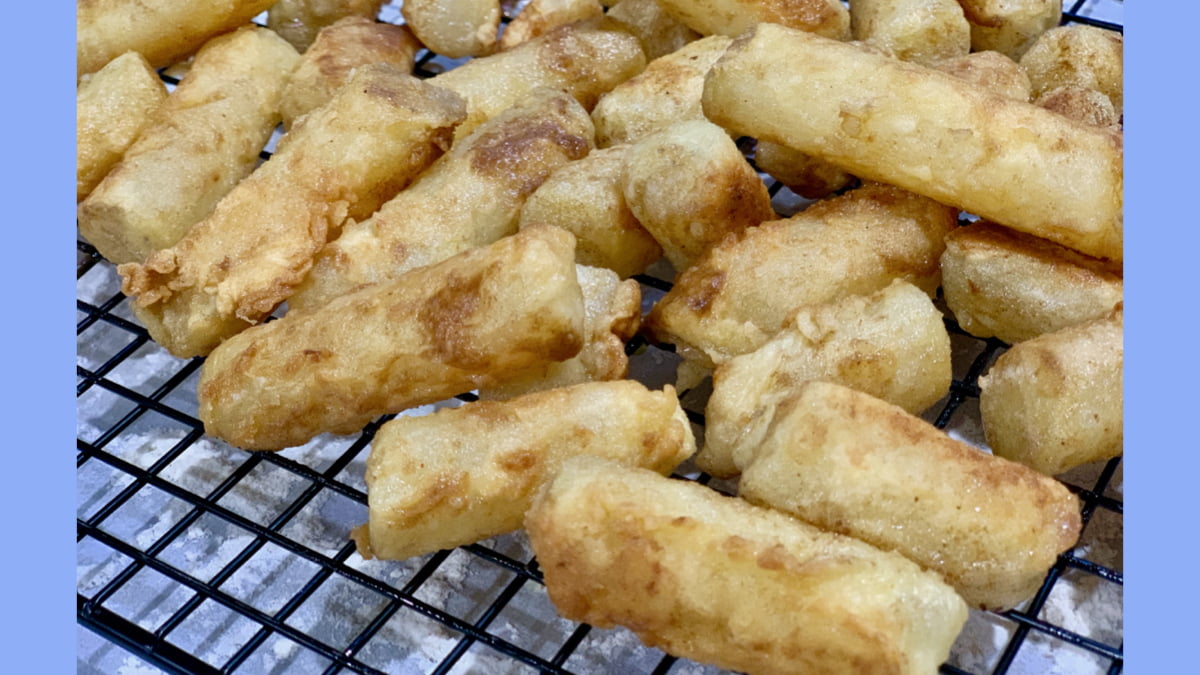
So, you’re a fan of Fish and Chips, huh? Let me guide you on How To Make British Chips To Outshine Your Fish, shared by an American who’s married to a traditional Brit!
Why Are They ‘Better Than British Chips’?
The name originated as a playful kitchen saying, those bold, half-serious claims you make when a dish turns out just right.
British chips are cherished for a good reason: they’re thick-cut, comforting, and evoke deep nostalgia. Yet, these potato sticks, with their crunchy coating, fluffy insides, and delightful pan-fried flavor, managed to bring something a bit extra to the table.
Shaped into neat cylinders, lightly coated, and pan-fried rather than deep-fried, they strike a balance between indulgence and restraint, golden and crunchy without overwhelming heaviness.
When the second batch vanished quicker than the first, the name became a fixture. It wasn’t meant as a dig, but a tribute to how a classic can be innovatively reinterpreted at home with care, quality fats, and a well-seasoned cast iron pan.
Bold? Perhaps. Delectable? Absolutely.
Chips vs Fish
Let’s be real: when you order Fish and Chips, it’s really those amazing potatoes you crave.
The fish is just there to convince you that your choice is somewhat healthy!
Potatoes have a long, often troubled past linked to famine and hardship across Europe.
Nonetheless, the tales surrounding the evolution of British Chips and Fish are truly enlightening.
Let me share insights I’ve gathered from my British husband on this subject.
Let’s Begin With The Authentic British Fish, Which Is Not Actually British
Fish and Chips were first brought to Britain by the Jewish community.
It all began in Holland when the Jewish community sought refuge in Great Britain, bringing with them a beloved fish recipe.
The Dutch, much like the English, excelled at fishing. While in Holland, the Jewish community had limited opportunities for industrial work, but fish was readily available for their diet.
Being a Jewish immigrant in England during that time meant seeking out familiar foods to recreate.
Fish was one of those staples—familiar and the best way to replicate a cherished meal!
The Rise Of British Fish Warehouses
Along the northern coastline of England, the North Sea was abundant with fish.
With the advent of the railways, fish captured by the British fleet from the east coast could be transported inland in large quantities.
This area saw significant population growth, primarily due to the influx of factories.
With people migrating from farms to urban jobs, their rural lives shifted dramatically.
The railway system enabled the delivery of substantial fish supplies from the coast to major population centers.
This led to the necessity for fish warehouses.
Fast Forward To Better Days And Superior Fish Cooking Techniques
In the mid-1800s, Joseph Malin, an Eastern European Jewish immigrant, opened the first ‘Chip Joint’!
As was common back then, a storefront was established to sell products while the family resided in the back.
This first Chip shop contributed significantly to making Fish and Chips the national dish of Britain.
The batter used for frying the fish was crafted from flour and fizzy beer.
This created a delightful crispy coating around the fish, often Cod, drawing lines around that tiny shop.
As for the potatoes… that’s a different tale entirely.
Why The Preference For Potatoes?
Curious, I asked my history-loving husband, ‘why potatoes’? Were they cultivated in the UK?
His answer was, “Potatoes were readily available and easy to prepare. Britain was relatively affluent. The farmers prospered.
The English grew potatoes, which were originally from South America, and they recognized it as a vital staple that was simple to cultivate.”
During my time in Brazil, I found potatoes to be abundant, prepared in countless ways, and often paired with other carbs—something quite different from what we Americans typically do!
National Dish – British Chips And Fish – Rationing
As noted in War History Online:
“Along with tea, this meal has become emblematic of British culture, despite the irony that its two primary components hail from distinct cultures.
Throughout both world wars, Fish and Chips were consistently available as one of the few meals.
It was believed that denying the British population their beloved fish and chips would hurt morale.“
My husband reassured me that Fish and Chips were not on the ration list!
What Sets British Chips Apart From French Fries?
In countries like the United Kingdom, Australia, South Africa, Ireland, and New Zealand, this style of potato is referred to as Chips. However, they’re essentially the same as the French Fries we recognize here in America.
After you cut the potatoes, regardless of your desired shape, be sure to rinse them in cool water to eliminate some starch.
The second crucial step is to thoroughly dry the potatoes, which can be tricky when preparing large quantities!
At this point, the temperature of the oil is key; too hot and it burns, too cool and you’ll end up with soggy potato sticks.
For that reason, and because I really dislike working with large quantities of hot oil, I devised this fantastic Hot Chips recipe.
Golden Brown British Chips Without A Deep Fryer
Personally, I’ve never been fond of deep fat fryers. They require so much oil, which can go rancid if reused too many times. Disposing of that much oil after each use just feels wasteful.
Thus, I opt to use a hot cast iron skillet and just enough fat to cook the amount I’m preparing.
The secret lies in the batter! Not a fizzy beer batter, where breading tends to overpower the fish or chips, but a simple, light batter that maintains a crisp texture while ensuring the potato remains substantial.
Crispy British Chips
Picture a delicate batter created simply by dredging the potato sticks first in a wet mixture, then in a dry one, each adding its own hint of flavor.
Not a heavy batter that drowns out the potato, but a light, flavorful coating. Also, envision not needing a gallon of oil to cook your chips!
Using a hot cast iron skillet with just a little oil, butter, or meat drippings, you’ll achieve crispier, more flavorful potato sticks that are far healthier than deep-fried beer-battered fish!
How To Make Your Fish Shine
Step-by-Step Instructions
Step 1 – Prepare the Potatoes
Using an apple corer, extract as many long tubes of potato from a large Russet potato. Creating these cylindrical pieces makes for an appealing final dish, or simply cut them into strips.
A full circle of the potato slice is more likely to become golden and crisp, rather than just the two flat sides.
Don’t forget to save the remaining potato you cored for quick ‘smashed’ potatoes for a different meal.
Step 2 – Blanch the Potatoes
In a pot of boiling salted water, add the potato pieces, cover, and quickly blanch them.
Just a minute will do.
This helps eliminate some starch and allows for quicker cooking when they’re dredged and cooked in a skillet.
Step 3 – Dredge
In one bowl, mix the milk, egg, and garlic, then coat the potato pieces in this mixture.
In another bowl, combine the flour, pepper, and salt.
Drop the egg-coated potatoes into the flour mixture and give it a shake to coat all sides.
Step 4 – Cook
In a medium-hot cast iron pan, combine oil and butter.
Arrange the dredged potato pieces in a single layer at the bottom of the pan.
Turn them often to ensure all sides cook to a golden brown.
Once done, remove from the pan and place on a cooling rack for a few minutes before serving.
Because Charles Dickens Said So!
Among many captivating items, my husband possesses a complete collection of leather-bound Dickens novels.
I was thrilled to discover mentions of British Chips And Fish in two of his novels!
No need to rush to the library; I’ve got the excerpts right here for you!
Oliver Twist
“Though the confines of Field Lane are narrow, it boasts a barber, a coffee shop, a beer house, and a fried-fish warehouse.”
A Tale Of Two Cities
“Hunger was ground into fragments in every farthing bowl of coarse potato chips, fried with a few reluctant drops of oil.”
Equipment Needed
- An apple corer is essential here, used to extract clean, uniform potato cylinders from large Russet potatoes, transforming a simple spud into something a bit more artistic and precise.
- A medium pot with a lid is crucial for blanching the potatoes initially, ensuring a fluffy interior before they hit the pan. For cooking, a large skillet or cast iron skillet provides consistent, even heating and a surface that promotes deep golden crispness with far less oil than a deep fryer.
- You’ll need two dredging dishes, one for the wet mix and the other for the potatoes, keeping your workspace tidy and efficient. Measuring cups and spoons are essential for achieving a light and well-balanced batter, while a garlic press makes quick work of fresh garlic, ensuring even flavor distribution.
- A supply of paper towels nearby is handy for draining excess oil and preserving the chips’ crispness. Finally, a reliable stovetop or burner ties everything together—simple, familiar, and exactly what comfort cooking demands.
Ingredients Needed
- At the core of these Better Than British Chips are large Russet potatoes, selected for their high starch content, which contributes to that shatteringly crisp exterior and soft interior. Cut into neat cylinders using an apple corer, they feel both playful and purposeful, transforming a familiar potato into something special.
- A simple egg provides structure to the light batter, allowing it to adhere without being heavy. Milk thins the mixture, while flour delivers a delicate coating that crisps beautifully in the pan rather than absorbing oil like a deep fry would.
- Garlic, finely minced or crushed, brings a subtle savoriness that enhances the potatoes as they cook. Salt is vital here, not only for seasoning but for drawing out moisture and amplifying that golden crunch, while a dash of cayenne or freshly ground black pepper adds warmth and gentle heat.
- For cooking, I prefer vegetable oil, but when it’s available, beef dripping or bacon fat elevate these potato sticks to a new plane, imparting a depth and richness that seems indulgent yet nostalgic. A final dab of butter at the end ties it all together, aiding browning and providing a nutty finish that makes these irresistible.
Fantastic Potato Recipes You Will Love
Oh, how we adore our potatoes! Over the years, I’ve crafted numerous delicious potato recipes, and I’m excited to share some with you.
One favorite, which I showcased on national television on The Great American Recipe with PBS, was Potato Crusted Quiche.
Here are more recipes you are sure to enjoy!
-
Apple Corer
-
Large cast iron skillet
- 4 Large Russet Potatoes scrubbed
- 1 Egg
- 1 Garlic clove crushed
- 1/4 cup Milk
- 1 cup Flour
- 2 tsp Salt
- 1/4 tsp Cayenne or Black pepper
- 3 cups Water
<li class="wprm-recipe-ingredient" style


Post Comment